Most clients walk into a salon with a screenshot and one question: balayage or highlights? From a phone screen the two can look almost identical, and both use lightener to take hair a few shades brighter. In the chair, though, they are different services — different tools, different timings, different grow-out, and a very different relationship with your mirror over the next few months. Here's what actually separates them, and how to know which one to book.
What Balayage Really Means
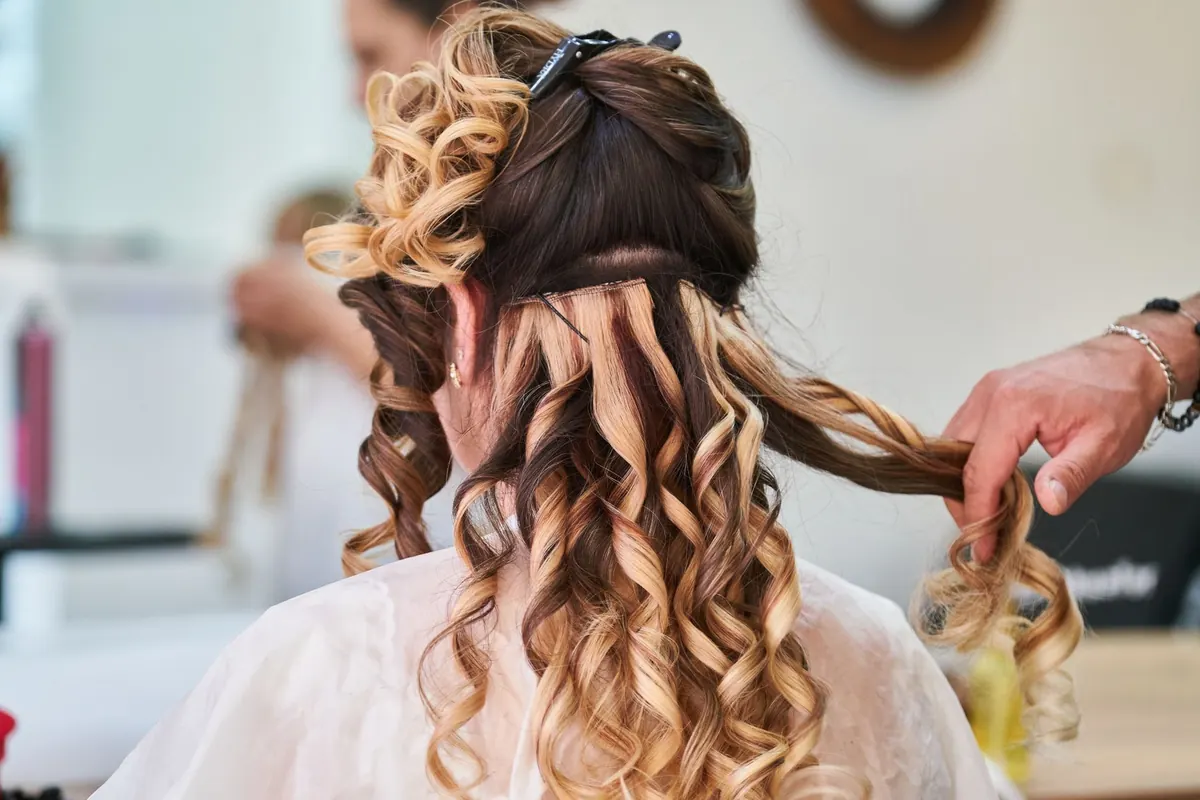
Balayage comes from a French word meaning "to sweep," and that's exactly the motion: your colourist hand-paints lightener onto the surface of sections of hair with a brush, working freehand rather than sealing each section in foil. Placement is decided in the moment, section by section, which is why two balayages never look the same.
The painting usually starts a little away from the scalp and tapers down toward the mid-lengths and ends. That gap at the root is the whole point. It creates a soft, blended gradient — dark at the top, progressively lighter below — instead of a hard line where the colour starts. The result reads as sun-kissed and lived-in, like hair that lightened on its own over a summer.
Because there's no defined starting line, regrowth is gentle. You don't get a stripe. You get a slightly longer root area that most people find flattering rather than sloppy.
Where balayage shines
It's forgiving on wavy, curly and textured hair, since painted sections don't demand perfectly straight, uniform strands. It also suits anyone who wants dimension — several tones moving through the hair — rather than an all-over lift.
What Highlights Actually Are
Highlights are a foil service. Your colourist takes woven sections of hair — fine slivers rather than full sheets — and places them in foil with lightener or colour applied close to the root. The foil holds heat and keeps each section separate, which gives you clean, controlled lift and more brightness right up at the scalp.
Terminology you'll hear:
- Partial highlights: foils placed around the face and through the top, leaving the back and under-layers mostly untouched. Good for a brightness boost or a first-time client.
- Full head: foils worked throughout the whole head for consistent, all-over lightness.
- Babylights: very fine, densely woven sections that mimic the fine natural variation children have in their hair. Subtle, but a lot of work to place.
- Teasylights: sections are backcombed before lightening, softening the root so the grow-out is less harsh.
Highlights give more contrast and a more uniform overall level of lightness than balayage. The trade-off is a visible root line as the hair grows, which is what sends most highlight clients back to the salon on a schedule.
Technique, Timing and Hair Health
Balayage is slower in the painting stage and often slower in processing, because lightener sitting on the surface of the hair lifts at a different rate than lightener trapped in foil. Highlights are fast to apply once your colourist is in a rhythm but can stretch long: a full head of foils on thick, long hair can easily take up most of an afternoon.
Both services use lightener, and both carry the same fundamental risk — dryness, breakage and unwanted warmth if the hair isn't strong enough for the lift you're asking for. If your hair is already lightened, previously relaxed or chemically straightened, or feels stretchy when wet, say so before anything is mixed. Ask for a strand test and let your colourist set realistic expectations. No shade of blonde is worth hair that snaps.
Upkeep: How Often You'll Be Back
This is often the deciding factor, and it has less to do with looks than with your calendar and budget.
Balayage clients typically return every three to five months, sometimes longer. Many book a gloss or toner in between to refresh tone, especially if they swim or spend a lot of time in the sun. Brassy ends are the usual complaint, and a purple or blue toning shampoo at home handles most of it.
Highlights are higher maintenance. To keep the root line crisp, expect a touch-up every six to eight weeks. You can stretch it if you like a softer, grown-out look, but at some point you're paying for a correction rather than a touch-up, which costs more.
What Drives the Cost
Salons price these services differently, so compare quotes carefully rather than assuming one is cheaper. Balayage is often quoted by time or as a custom price after a consultation, because the amount of painting varies enormously. Highlights are more commonly priced per service — partial versus full — or by foil count.
Either way, the variables are the same: how much hair you have, how much lift you need, how many separate tones are involved, and how long it all takes. Before you book, ask four things: is toner included in the quote, what's the realistic time estimate, what happens if the service runs longer than expected, and what would a maintenance appointment cost. A salon that answers all four plainly is a salon worth returning to.
Which One Suits You?
Choose balayage if: you're after a soft, blended grow-out; you don't want to sit in the chair every two months; your hair is wavy, curly or prone to frizz; or you want dimension rather than overall lightness.
Choose highlights if: you want noticeable brightness near the scalp; you're covering early greys with lightener; you like a clearly defined contrast between root and length; or you're willing to commit to regular appointments to keep it sharp.
There's also a middle path. Plenty of colourists combine both — a few foils around the face for brightness, hand-painted balayage through the lengths for softness — which gives you the best of each and a grow-out that behaves.
Before You Book
Bring two or three photos, and make sure the hair in them is similar to yours in texture and starting colour. Be honest about your history: box dye, henna, straightening treatments, and old highlights all change what's possible in one appointment. Ask how much time you'll need at home — bond-building treatments, a toning shampoo, heat protection and trims every ten to twelve weeks all keep lightened hair looking intentional instead of tired.
If you're unsure, book a consultation rather than the service itself. A good colourist will look at your hair, ask about your routine, and tell you honestly whether balayage or highlights will get you closer to the photo in your hand. Then book the one that fits your hair and your life, not just your camera roll.
Photo: Engin Akyurt / Pexels