A facial looks self-explanatory until you're the one lying on a treatment bed with your shoes off, wondering whether that tingling means it's working or whether you should say something. The good news: the hour is usually structured, and most therapists follow a similar arc. Knowing that arc in advance takes the guesswork out of it — and makes it much easier to speak up when you want something changed. Here's what actually happens between the consultation card and the moment you walk out with a slightly flushed face.
The first ten minutes: consultation and skin reading
Expect to spend a few minutes talking before anyone touches your face. A thorough therapist will ask what you cleanse with, how your skin behaves through the day, whether it feels tight after washing, and what tends to happen around your chin or forehead when you're stressed.
They'll also ask the questions that matter for safety: are you using prescription retinoids such as tretinoin or adapalene, have you had a peel, laser treatment or waxing recently, are you pregnant or breastfeeding, do you have any allergies, and are you taking any medication that thins the skin or makes it light-sensitive. Answer honestly. It's not a test, and it changes what they use on you.
If you're prone to reactions, ask for a patch test a day or two before your appointment — most salons will do this for free. And if you have an active cold sore, a fresh sunburn, or a skin condition currently flaring, mention it. Many therapists will suggest rescheduling rather than risk making it worse.
Cleanse: the first thing you'll feel
Most facials open with a double cleanse. The first pass is usually an oil, balm or milk, worked in with dry hands to lift sunscreen, makeup and the day's grime. The second is a gel or cream cleanser to finish the job. It feels cool, slippery and surprisingly pleasant, especially if you skipped makeup remover that morning.
This is also where warm steam or a hot towel may come in. Steam softens the surface of the skin and makes what follows more comfortable. If you find steam stifling — it happens, especially with allergies — say so. A towel works just fine.
Exfoliation, steam and extractions
Next comes exfoliation, which can mean a physical scrub, an enzyme mask, or a mild acid solution left on for a few minutes. Expect the acid to tingle or prickle briefly. That's normal. Sharp stinging, burning, or anything that makes you want to flinch is not — flag it right away.
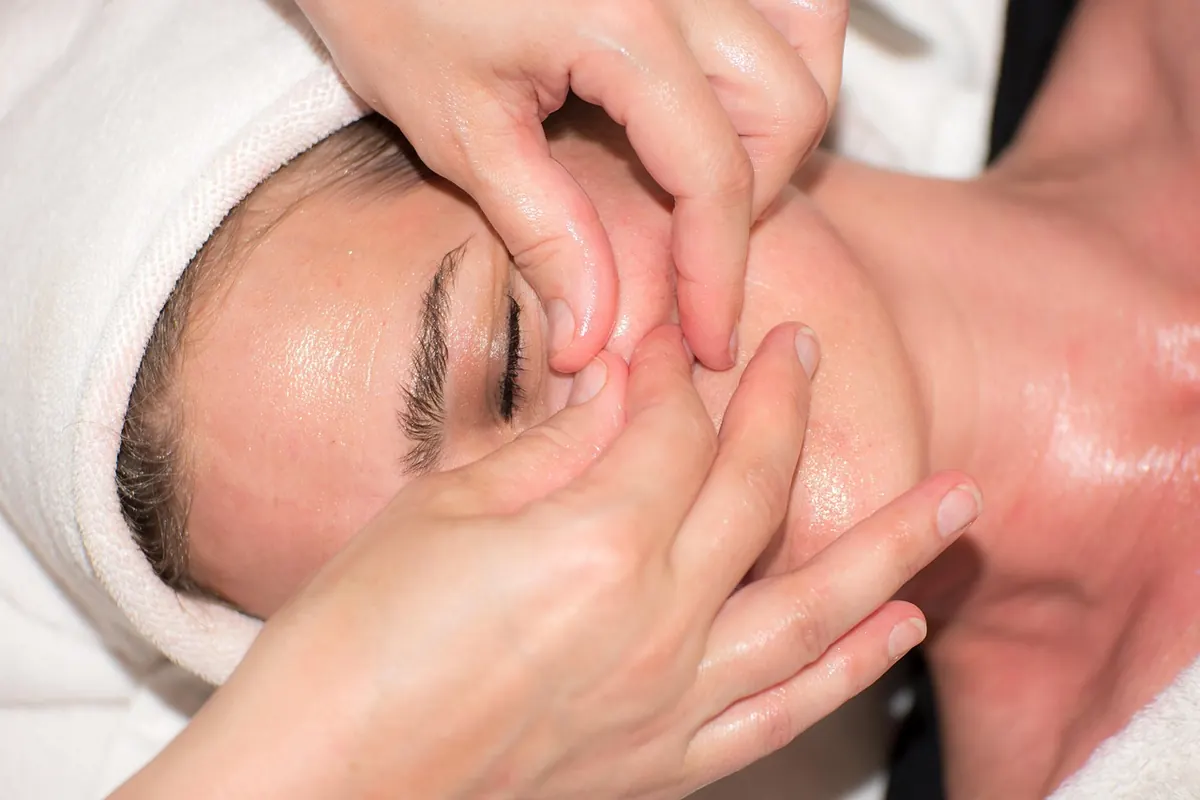
Then, if your skin needs it, extractions. This is the part first-timers worry about most. Here's the honest version: a therapist applies firm, controlled pressure around a blocked pore with gloved fingers or a small tool. Some come out easily. Others take a few attempts and feel like a sharp pinch that lasts several seconds, and your eyes may water. It's uncomfortable rather than unbearable, and it's completely reasonable to ask them to skip a stubborn spot or stop altogether.
Afterwards your skin will look red and slightly angry in those areas. That settles, usually within a few hours.
Massage, mask and the part you'll remember
Once the clearing is done, the tone of the appointment shifts. The therapist massages in a serum or facial oil, working across your face, jaw, temples and often your neck, shoulders and décolletage. Pressure should be relaxing but not so light it tickles. If you'd like firmer work or you'd rather skip your jaw, just say.
Then a mask goes on, chosen for what your skin needed that day — hydrating, calming, clay-based, or something gel-like for brightening. Depending on the type, it may feel cool and wet, gradually tightening, or thick and occlusive. While it sets, many therapists give you a scalp or hand and arm massage, which is quietly one of the best parts.
What's on the trolley
Salons vary widely, and not every treatment includes machines. If your therapist plans to use one, ask what it does before they start. The common ones:
- Sonic cleansing brush — a soft vibrating brush used during cleansing. Feels like a gentle buzz.
- Extraction tools — small metal loops or gauges for blocked pores, used after softening the skin.
- High-frequency wand — a glass electrode that produces a faint ozone smell and a light tingling. Often used on spots.
- LED mask or panel — coloured light worn over the face. No sensation at all, just warmth or coolness and quiet for twenty minutes.
- Microcurrent — low-level electrical pulses that make muscles twitch slightly. Some people find it odd; it shouldn't hurt.
- Gua sha or facial rollers — manual tools for massage and drainage. Cool and firm against the skin.
- Cold globes or ice rollers — used at the end to calm redness and reduce puffiness.
Your therapist should explain anything they pick up. If they don't, ask.
The last ten minutes and going home
The finish is unglamorous but important. The mask comes off, a final serum and moisturiser go on, and sunscreen goes on top. You'll be handed a mirror, usually while looking a bit flushed. Then the practical bit:
- Leave the salon without makeup if you can, or keep it to a tinted moisturiser for the rest of the day.
- Skip the gym, sauna, hot yoga and long hot showers for the next several hours. Heat and sweat undo the calming.
- Don't exfoliate or use retinol at home that night. Give your skin a night off.
- Keep sunscreen on tomorrow. Post-facial skin is more responsive to sun.
- Drink water and go to bed early if you can. It sounds soft, but it helps.
Getting your money's worth from your first facial
Book when you don't have a wedding or a photoshoot the next day. Mild redness and the occasional breakout around extracted areas are normal for a day or two, and the glow tends to peak a few days later, not instantly. Arrive without makeup if possible so the consultation is easier to read, and be specific about what you want: "I'm mostly worried about congestion on my chin," or "I want something relaxing, not a deep clean."
Ask what they used and why, and whether it's something you could reasonably add at home. Take a photo of the product names if that's easier than remembering. If a therapist recommends a whole new routine, it's fine to buy one thing and think about the rest.
One last note: a facial is a good maintenance treatment, but it isn't a medical one. Persistent acne, pigmentation, unusual moles or a rash that won't settle deserve a doctor or dermatologist rather than another appointment at the salon.
Photo: office469 / Pixabay